How many dams are there on the Mekong River?
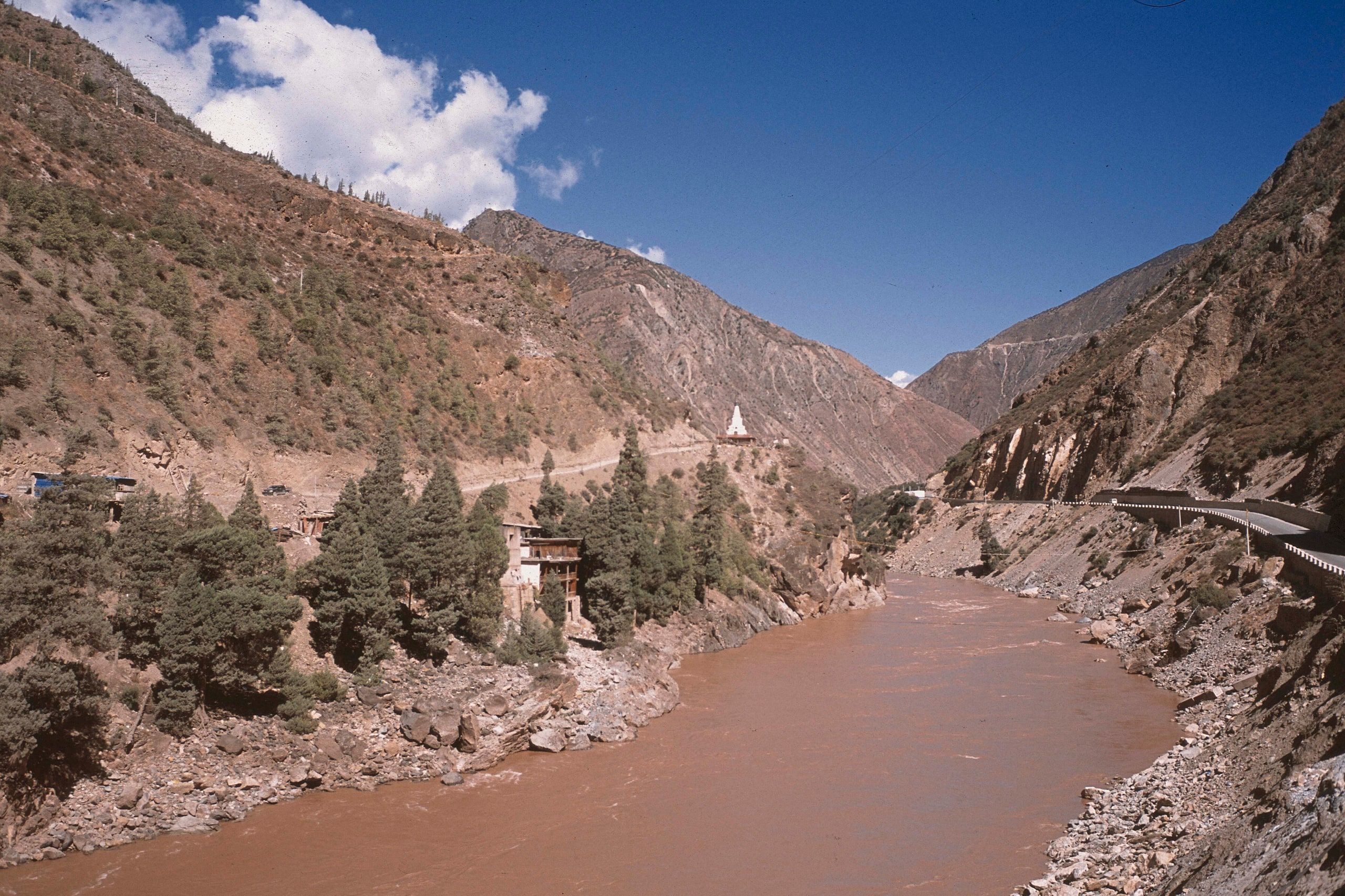
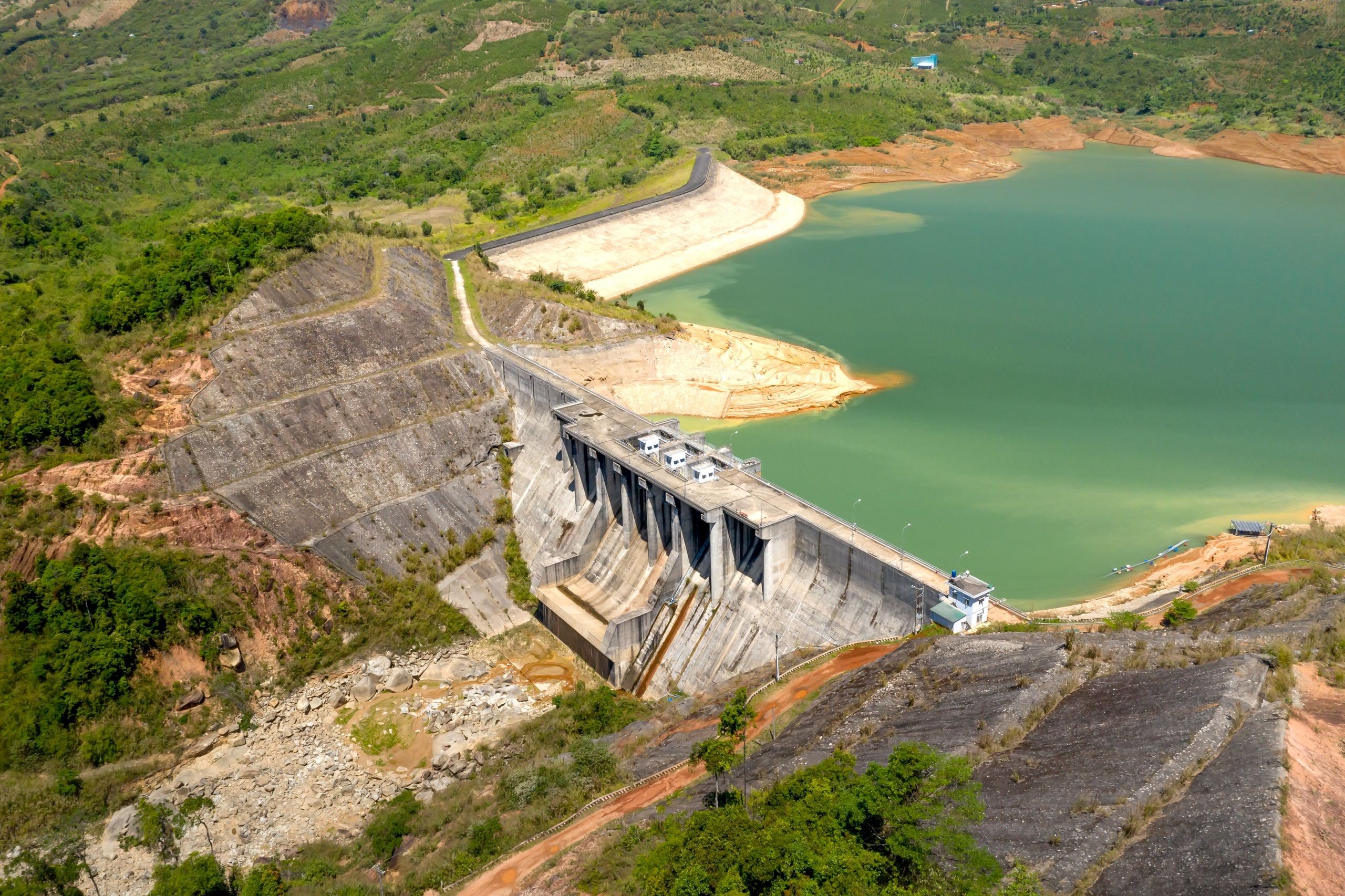
On the main stem, the Mekong River Commission counts twelve dams in operation in China, where the river is called the Lancang[1]. The most recent to come online is Tuoba[1]. Further down, two dams operate in Laos: Xayaburi since October 2019 and Don Sahong since January 2020[3]. They are the only main-stem dams downstream of China.
Then come the tributaries. In the lower basin (Laos, Thailand, Cambodia, Vietnam), the MRC lists 88 hydropower plants in operation, 20 under construction and 14 planned, main stem included[1]. Laos accounts for most of them: over a hundred dams including tributaries[5].
Mekong dams under construction and planned
In Laos, the Luang Prabang dam (1,460 MW) was 72% complete in July 2026, due to start operating in 2030[4]. UNESCO is not asking for it to be halted, but is monitoring its effects on the World Heritage town, about 25 kilometers downstream[14]. The Pak Beng project (912 MW) is in preparatory works, with operation announced for 2033[5]. Sanakham, near the Thai border, is the only project still under consultation at the MRC[2].
In July 2026, Laos and Myanmar signed an agreement to study a 2,790 MW dam on the stretch where the river divides them[7]. Cambodia, for its part, suspended all main-stem dams in 2020 until 2030, freezing the Stung Treng and Sambor projects[6].
| Dam | Country | Capacity | Status |
|---|---|---|---|
| Border project | Laos and Myanmar | 2,790 MW | Agreement to study it signed in July 2026[7] |
| Pak Beng | Laos | 912 MW | Preparatory works; operation announced for 2033[5] |
| Luang Prabang | Laos | 1,460 MW | Under construction, 72% complete in July 2026; due to operate in 2030[4] |
| Xayaburi | Laos | 1,285 MW | In operation since October 2019[16] |
| Pak Lay | Laos | 770 MW | Planned, power sold to Thailand; start of works unconfirmed[18] |
| Sanakham | Laos | 684 MW | MRC prior consultation under way[2][15] |
| Don Sahong | Laos | 260 MW | In operation since January 2020[3][17] |
| Stung Treng | Cambodia | not set | Suspended until 2030[6] |
| Sambor | Cambodia | not set | Suspended until 2030[6] |
- In operation
- Under construction or preparatory works
- Planned or under consultation
- Suspended until 2030
- Project with no set site
Approximate positions from Global Energy Monitor and Wikipedia, snapped to the river line. Status as of October 2026, detailed in the table. Base map: Natural Earth.
Why build dams on the Mekong?
For Laos, hydropower is first of all an export. The country sells about 80% of its electricity to its neighbors, earning around 2.6 billion dollars, a major resource for one of the poorest countries in the region[19]. The main-stem dams sell mostly to Thailand[5].
Demand next door is growing. Vietnam, which imported about 1.5 GW from Laos in 2025, aims for at least 8 GW by 2030. Cambodia imports about 200 MW, produced by Don Sahong, and plans to reach 3 GW by 2030. Singapore has received 200 MW of Lao power since January 2026[19]. For these countries, it is electricity that burns neither coal nor gas; for people along the river, it comes with the effects described below.
Mekong dams hold back the river's sediment
Dams hold back the silt the river carries. At the head of the delta, the suspended load fell from 100 to 160 million tonnes a year before the dams to about 43 million tonnes, and the Chinese cascade alone traps around 86%[8]. That silt feeds the rice fields and offsets the delta's natural sinking.
Did China's dams worsen the Mekong droughts?
From 2019 to 2021, the Mekong fell to its lowest flows in more than sixty years[9]. In 2020, a US-funded study by the firm Eyes on Earth concluded that Chinese dams had held back water during the drought; the MRC questioned its method[10]. In its 2022 report, the MRC blamed the crisis mainly on low rainfall, while acknowledging that upstream dams change the river's regime: more water in the dry season, less in the rainy season[9].
Since November 2020, China has shared water levels from two of its stations with the MRC all year round, not just during the monsoon[13].
Have dams changed the Mekong's water level?
Yes, and the MRC's own readings show by how much. Its stations have recorded the river's level for decades: we compared the monthly averages of three of them before and after the big dams[20]. These are gauge heights at each station, so they compare from one period to another, not from one station to another.
The clearest change is at Luang Prabang. From 2010 to 2018, the river there dropped to around 4.5 m in March; from 2020 to 2025 it stays near 8.8 m, 4.4 m higher, while the August flood has barely moved, at around 12 m. The gap between low and high water has shrunk from 7.4 m to 3.3 m[20]. The Xayaburi reservoir, filled in 2019 downstream, now backs up to the town: as early as February 2020, the MRC noted that the level at Luang Prabang stayed close to its maximum because of the dam[21].
Upstream, at Chiang Saen, the Thai station closest to China, the Chinese cascade is at work. Its two largest reservoirs, Xiaowan and Nuozhadu, came into service in 2010 and 2014; they store monsoon water and release it in the dry season, according to Chinese state television[22]. At Chiang Saen, the river in March is 1.1 m higher than in 1990-2009, and the August flood 1.7 m lower: the yearly range has been halved, from 4.7 m to 2.3 m[20]. This is the “more water in the dry season, less in the wet season” the MRC describes[9].
In Cambodia, the effect fades. At Kratie, the September flood peaks at 17.3 m on average in 2020-2025, against 19.2 m in 1990-2009, and the March low is slightly higher, 7.2 m against 6.4 m: the yearly range is still more than 10 m[20]. Over these six years, which include the 2020 and 2021 droughts, the share of the dams cannot be separated from that of the missing rain[9].
What dams and sand mining change for the Tonle Sap
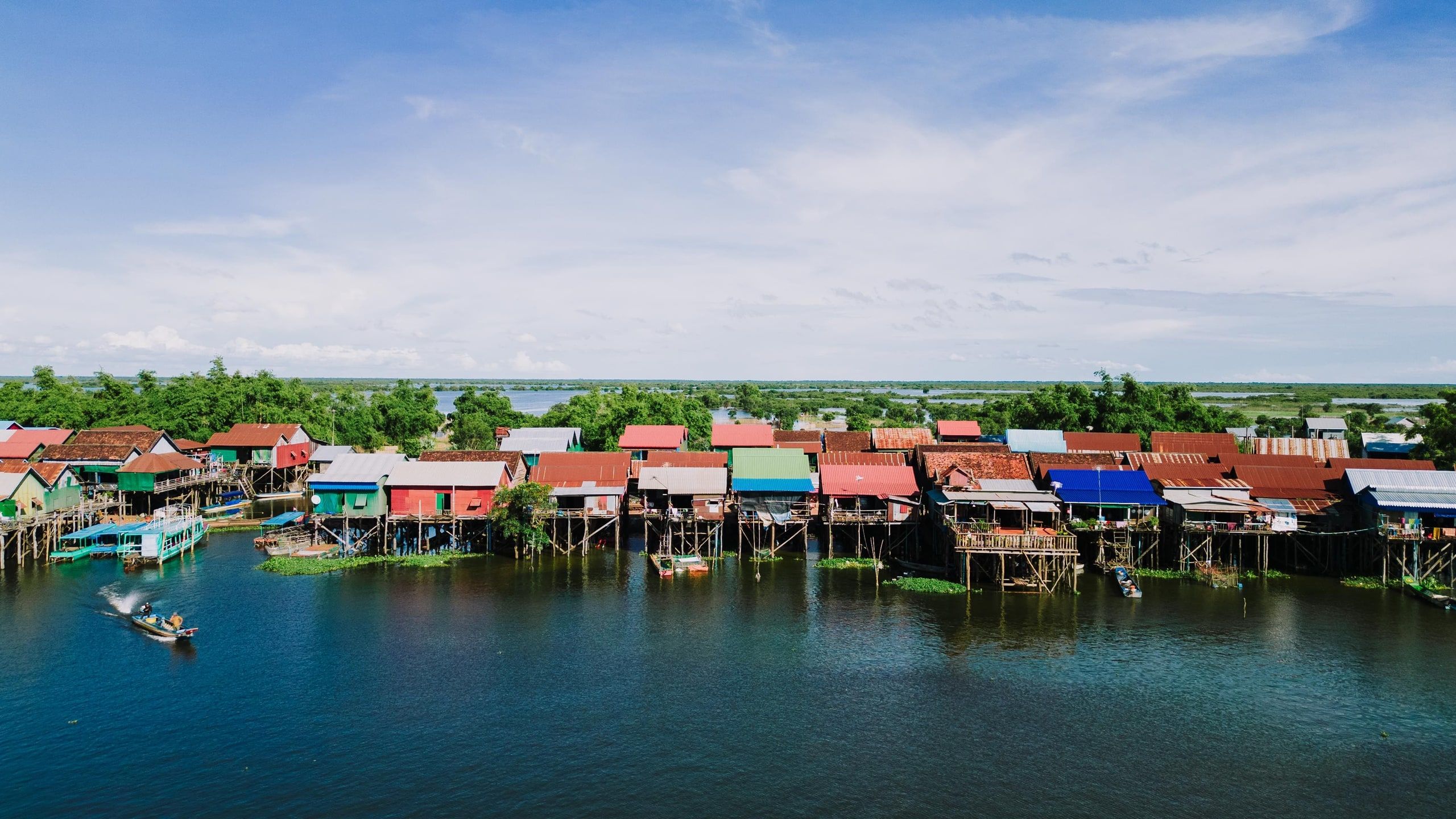
The Tonle Sap fills when the flooding Mekong pushes up the river toward the lake. In 2020 and 2021, that volume reached only 58% and then 51% of the average[9]. A study published in November 2025 blames most of the decline not on dams alone, but on the lowering of the riverbed, dug out by sand mining and starved of the sediment held back upstream: the volume flowing back to the lake fell by 40 to 50% between 1998 and 2018[11].
Dams and fishing on the Mekong
Dams block the routes of migratory fish. According to a study quoted by the WWF, dams in the basin could cut capture fisheries by 23 to 39%; with the eleven dams planned on the lower Mekong main stem, losses would reach about 44% in Cambodia and 42% in Vietnam[12]. These are projections, which depend on the dams actually built.
What the dams change for a trip on the Mekong
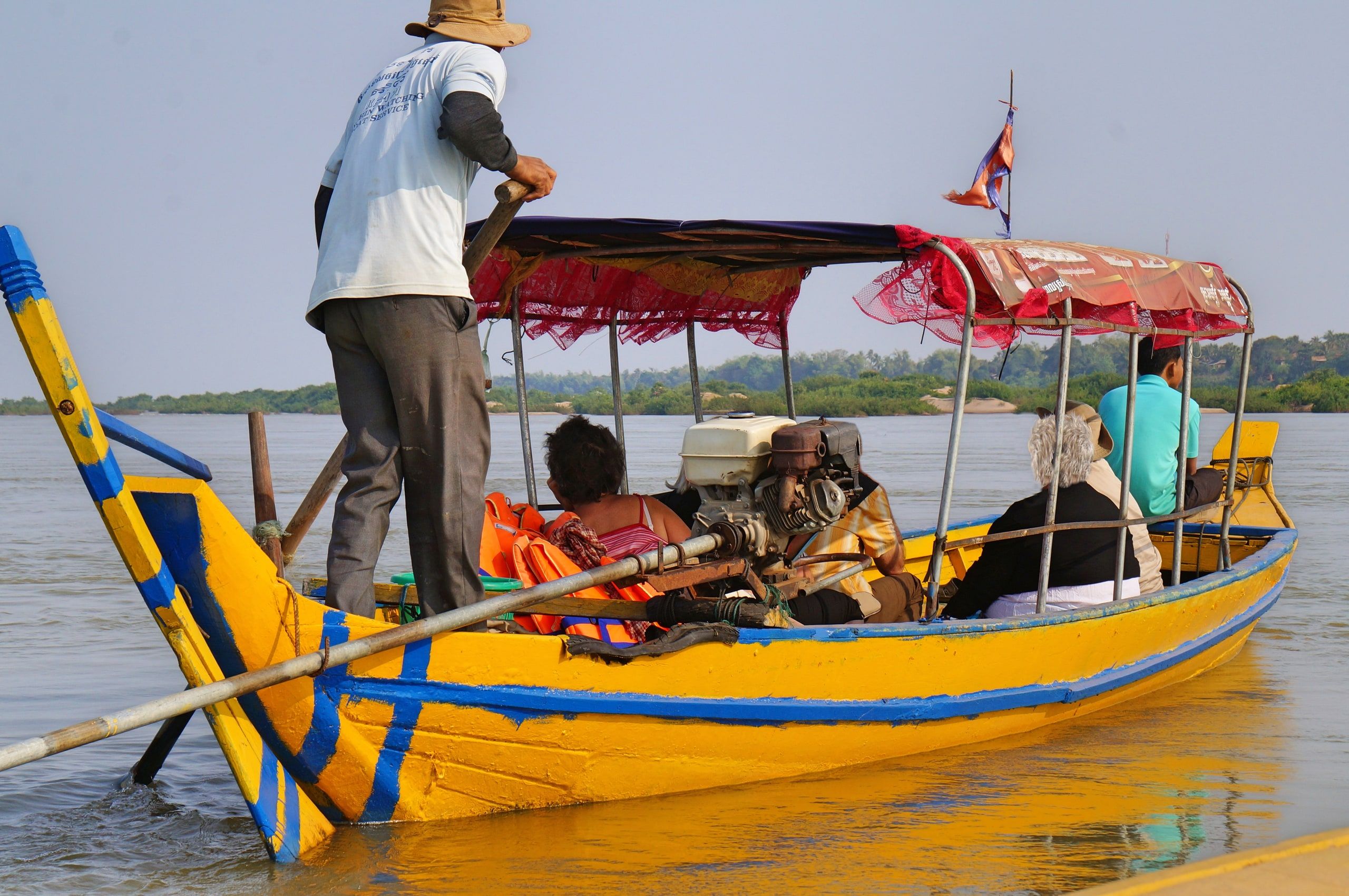
The slow boat from Huay Xai to Luang Prabang travels the stretch where the Pak Beng and Luang Prabang dams are planned. The Pak Beng project includes a ship lock and a fish passage[5]. At Luang Prabang, the dam is being built about 25 kilometers (15 miles) north of the town: passenger boats and cargo vessels of up to 500 tonnes will pass its lock in about forty minutes, and the reservoir is to stay below 310 meters above sea level to spare the World Heritage town[4].
Farther south, Don Sahong blocks one of the river's channels in the 4,000 Islands, in Laos[17]. Cambodia has no dam on the main stem: from Stung Treng to the delta, the river stays free-flowing until at least 2030[6].
Who decides on Mekong dams?
Cambodia, Laos, Thailand and Vietnam created the Mekong River Commission in 1995. Any project on the lower Mekong main stem goes through a prior consultation among these four countries. It is not meant to approve or reject the project, but to seek agreement on its conditions[15]. Five consultations have been concluded, for Xayaburi, Don Sahong, Pak Beng, Pak Lay and Luang Prabang; Sanakham's is ongoing[2]. China and Myanmar are not members.
Questions about Mekong River dams
How much power do the lower Mekong dams produce?
How much does the Luang Prabang dam cost?
Sources
- Mekong River Commission, “Hydropower”: dams in operation on the Chinese stretch, power plants in the lower basin , undated page, accessed October 8, 2026
- Mekong River Commission, “PNPCA Prior Consultations”: concluded and ongoing prior consultations , accessed October 8, 2026
- Radio Free Asia, “Two Large Mekong River Dams in Laos to Start Operations by End of Year” (Xayaburi, Don Sahong) , October 15, 2019
- The Nation, “Luang Prabang hydropower project advances to 72% completion” , July 21, 2026
- Radio Free Asia, “Satellite imagery shows work underway on Laos' latest large Mekong River dam” (Pak Beng) , August 6, 2026
- VOA, “Cambodia halts hydropower construction on Mekong River until 2030” , March 2020
- The Star, “Laos, Myanmar ink deal to study 2,790MW Mekong hydropower project” , July 8, 2026
- Chua et al., “Can restoring water and sediment fluxes across a mega-dam cascade alleviate a sinking river delta?”, Science Advances , May 1, 2024
- Water Power Magazine, “MRC says bold actions needed to address low Mekong flows” (MRC report on 2019-2021 low flows) , January 18, 2022
- Al Jazeera, “China's dams exacerbated extreme drought in lower Mekong: Study” (Eyes on Earth study and MRC response) , April 24, 2020
- Le et al., “Sand-mining-driven reduction in Tonle Sap Lake's critical flood pulse”, Nature Sustainability (Newcastle University press release) , November 2025
- Hughes, K. et al., WWF and 25 organizations, “The Mekong's Forgotten Fishes” (citing Ainsworth et al., 2022) , 2024
- Open Development Mekong, “China commits to share year-round water data with Mekong River Commission” , October 2020
- UNESCO World Heritage Committee, decision 48 COM 7B.16 (Town of Luang Prabang) , 48th session, 2026
- Mekong River Commission, “Sanakham Hydropower Project”: how prior consultation works , May 2020
- Kaohoon International, “EGCO Commences the COD of 1,285MW HPP in Xayaburi” (Xayaburi commercial operation) , October 2019
- Mekong River Commission, “Don Sahong Hydropower Project”: capacity and site , undated page, accessed October 8, 2026
- Powerline, “J-POWER and Hazama Ando join 770 MW Pak Lay hydropower project in Laos” , April 30, 2026
- Bangkok Tribune (from Dialogue Earth, T. Roney), “Explainer: How Laos' role as Southeast Asia's "battery" is changing” , September 13, 2026
- Mekong River Commission, data portal, “Water Level” series (manual readings) for the Chiang Saen, Luang Prabang and Kratie stations; monthly averages calculated by us , data retrieved October 11, 2026
- Mekong River Commission, “Weekly Dry Season Situation Report for the Mekong River Basin,” week of February 18 to 24, 2020 (published on ReliefWeb) , February 25, 2020
- CGTN (Chinese state television), “Why has China built dams along the Lancang River?” , July 23, 2020, updated August 25, 2020

Pierre-Marie Coupry
Editor-in-chief of the French travel site Bon Plan Voyage, where he has published since 2012. He checks every practical detail against official sources and proofreads everything before it goes live.
Our method